Is Coconut Oil Comedogenic?
Comedogenic rating: 4/5 — Likely to clog pores
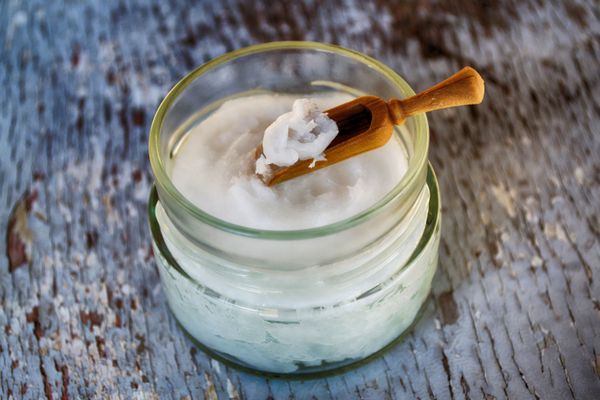
Coconut Oil is a plant-derived carrier oil rich in fatty acids that condition and soften skin. In cosmetics it is typically found in facial oils, cleansing balms, body lotions, serums and hair products. Its INCI (International Nomenclature of Cosmetic Ingredients) name is Cocos Nucifera Oil. On a label it may also appear as cocos nucifera oil, cocos nucifera (coconut) oil.
| Comedogenic rating | 4/5 — Likely to clog pores |
|---|---|
| Pore-clogging | Likely |
| Fungal-acne safe | No — potential trigger |
| Category | Carrier oil |
| INCI name | Cocos Nucifera Oil |
| Also known as | cocos nucifera oil, cocos nucifera (coconut) oil |
Is Coconut Oil comedogenic?
Yes — Coconut Oil is considered highly comedogenic, scoring 4 out of 5. That means it has a strong tendency to block pores and is a well-known trigger for closed comedones, blackheads and breakouts on acne-prone skin. If your skin is oily or congestion-prone, Coconut Oil is one of the ingredients most worth avoiding in leave-on facial products, though it can still be fine in short-contact rinse-off products or on the body.
Does Coconut Oil cause fungal acne?
Separately from pore-clogging, Coconut Oil is considered a potential fungal-acne (Malassezia) trigger. Fungal acne — properly called Malassezia folliculitis — appears as small, uniform, sometimes itchy bumps, and is fed by certain oils, fatty acids and esters. This is a different problem from comedogenic clogging, so if you are prone to fungal acne you may want to avoid Coconut Oil even when its comedogenic rating is low.
Should you use Coconut Oil if you're acne-prone?
If you are acne-prone, it is safest to keep Coconut Oil away from your face in leave-on products. It can still be useful for dry body skin, hair, or in cleansers where it is quickly rinsed off. Normal and dry skin types often tolerate it without issue.
Safer alternatives to Coconut Oil
How Coconut Oil compares to other carrier oils
| Ingredient | Rating | Pore-clogging |
|---|---|---|
| Coconut Oil | 4/5 | Likely |
| Argan Oil | 0/5 | Unlikely |
| Hemp Seed Oil | 0/5 | Unlikely |
| Safflower Oil | 0/5 | Unlikely |
| Sunflower Seed Oil | 0/5 | Unlikely |
| Castor Oil | 1/5 | Unlikely |
| Grapeseed Oil | 1/5 | Unlikely |
Frequently asked questions
Is Coconut Oil comedogenic?
Yes — Coconut Oil is considered highly comedogenic, scoring 4 out of 5. That means it has a strong tendency to block pores and is a well-known trigger for closed comedones, blackheads and breakouts on acne-prone skin. If your skin is oily or congestion-prone, Coconut Oil is one of the ingredients most worth avoiding in leave-on facial products, though it can still be fine in short-contact rinse-off products or on the body.
Does Coconut Oil cause fungal acne?
Separately from pore-clogging, Coconut Oil is considered a potential fungal-acne (Malassezia) trigger. Fungal acne — properly called Malassezia folliculitis — appears as small, uniform, sometimes itchy bumps, and is fed by certain oils, fatty acids and esters. This is a different problem from comedogenic clogging, so if you are prone to fungal acne you may want to avoid Coconut Oil even when its comedogenic rating is low.
Is Coconut Oil safe for acne-prone skin?
If you are acne-prone, it is safest to keep Coconut Oil away from your face in leave-on products. It can still be useful for dry body skin, hair, or in cleansers where it is quickly rinsed off. Normal and dry skin types often tolerate it without issue.
What products is Coconut Oil found in?
Coconut Oil is a plant-derived carrier oil rich in fatty acids that condition and soften skin, and is commonly found in facial oils, cleansing balms, body lotions, serums and hair products.
What can I use instead of Coconut Oil?
Lower-risk swaps include Squalane, Hemp Seed Oil, Sunflower Seed Oil, all of which rate lower on the comedogenic scale.
Checking a specific product?
Paste the full ingredient list into our free pore-clogging ingredient checker for an instant verdict.
Open the ingredient checker →